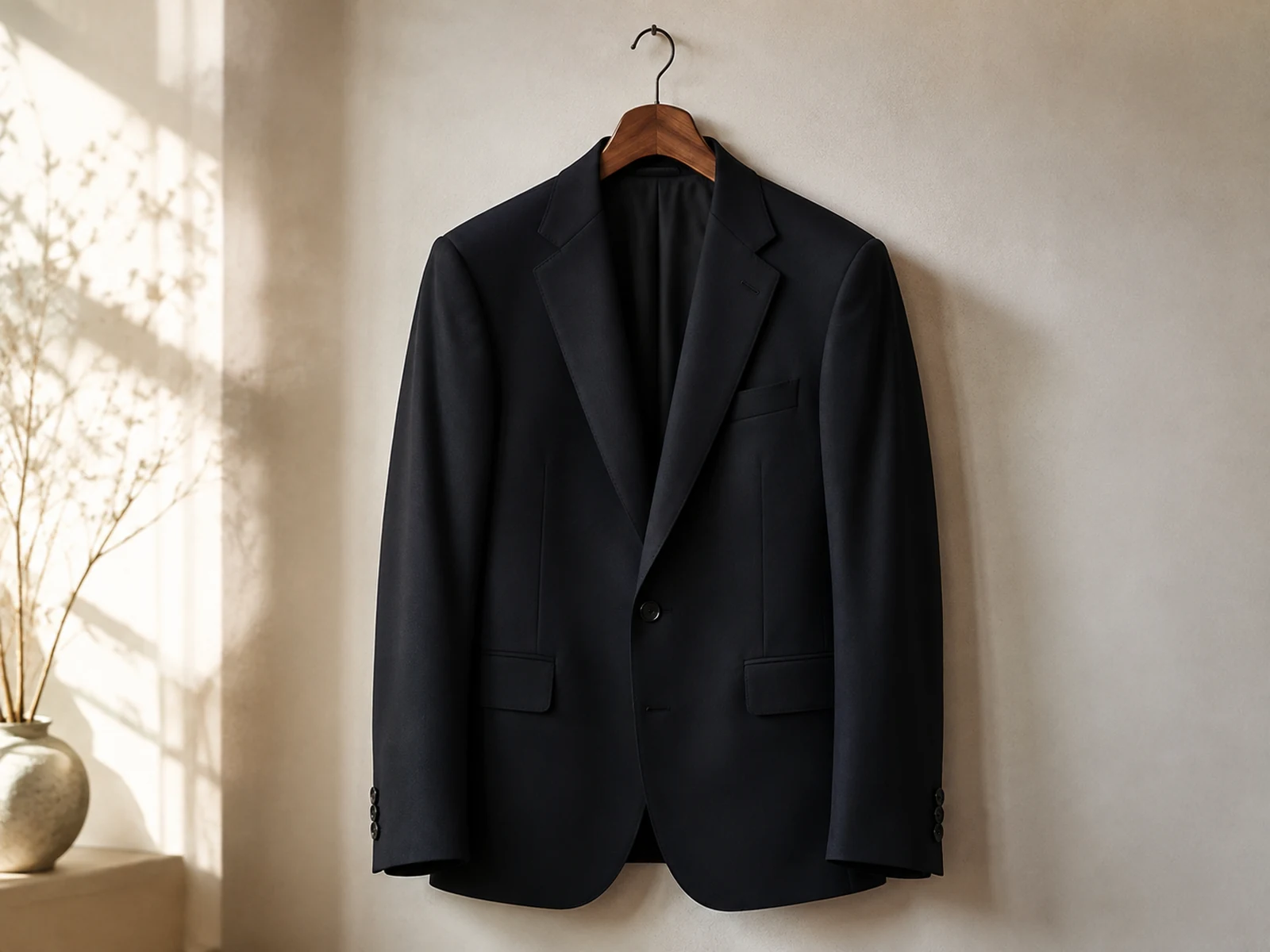
Dry cleaning is part of Homi's laundry and dry cleaning service in Amman. Pieces are collected from your door, cleaned in solvent rather than water, finished, and returned to you covered and on hangers.
What dry cleaning actually is
The name is misleading. Dry cleaning is not dry. The garment is immersed in liquid, agitated and spun much as it would be in a washing machine. The difference is the liquid. Instead of water and detergent, the machine uses a chemical solvent that dissolves oils and greases without swelling the fibres.
That distinction is the whole point. Water makes natural fibres swell, move and then settle in a different position as they dry. Solvent does not, so the garment comes out the same size and shape it went in, with its drape, weight and finish intact.
Because solvent targets oil rather than water-based soiling, dry cleaning is excellent on body oils, cooking grease and general dulling, and comparatively weaker on sugar, juice and other water-soluble marks. Those are treated separately by hand before the garment goes into the machine, which is why it matters that you point them out.
What water does to the wrong fabric
Wool shrinks. Each wool fibre is covered in microscopic scales, and warm water plus agitation makes those scales interlock permanently. The garment felts, tightens and never returns. A wool coat that has been through a domestic wash is finished.
Tailoring collapses. A structured jacket is built around interlining and, on better garments, a floating canvas chest piece stitched between the outer cloth and the lining. Those layers are different materials that shrink at different rates. Put them through water and they pull against each other, so the chest ripples, the lapel loses its roll and the shoulders sit wrong. No amount of pressing brings that back.
Silk dulls and marks. Water leaves rings on silk and can strip the finish that gives it its lustre. Dye can bleed from one panel into another.
Embroidery and beadwork come loose. Metallic thread tarnishes, sequins cloud, and beads stitched to a base fabric that shrinks around them start to pull free.
Which garments should go to dry cleaning
Send suits and tailored jackets, wool coats, cashmere and fine knitwear, silk shirts and dresses, formal and occasion wear, abayas, anything embroidered or beaded, lined trousers and skirts, ties, and pleated garments where the pleats need to survive.
Leave out anything ordinary. Cotton shirts, linen, denim, jersey, towels, bedding and children's clothes are all better and more cheaply handled by the wash services: wash and iron if they need pressing, wash and fold if they do not. Dry cleaning them adds cost without adding anything else.
Two specific garments deserve their own attention because they are so easy to get wrong: read the abaya cleaning page and the suit dry cleaning page before sending either.
Read the care label first
The label inside the side seam is the manufacturer's own instruction, written by the people who know what the garment is made of and how it was assembled. If it says dry clean only, treat that as final rather than a suggestion.
Where a garment has no label, or the label has worn away, tell us at booking and describe what you think it is. An unlabelled garment is assessed by hand, and a cautious method is chosen. If you are unsure, photograph the label when you book, because it removes the guesswork entirely.
What happens to your garment
Inspection and tagging
Each piece is checked for stains, weak seams, loose buttons and existing damage, then tagged so it stays with your order and comes back to you.
Pre-treatment
Marks are worked on individually by hand. Water-based stains in particular need this step, since the solvent alone will not shift them.
Cleaning
The garment is cleaned in solvent, in a load grouped by colour and fabric weight so nothing delicate is knocked about by something heavy.
Finishing
Pressing is done on shaped equipment rather than a flat board, so collars, shoulders, lapels and pleats are set the way the garment was cut. It is then covered and hung.
How dry cleaning is priced
Per piece, not by bundle. A shirt and a beaded evening dress are not the same job, and pricing them as though they were would be dishonest to one of the two. A two-piece suit is counted and cleaned as a pair, because jacket and trousers must always be cleaned together.
There is a minimum order value, so a single item on its own is worth combining with a wash bundle to make the collection worthwhile.
You see the price before you confirm the booking, and there are no hidden fees.
How long it takes
Most dry cleaning is back within one to two days. Heavily soiled, embroidered or beaded pieces take longer, because the hand work at the start and the finishing at the end cannot be hurried without risking the garment.
If you need something for a particular date, say so at booking rather than after collection. We will tell you whether it is realistic before the piece leaves your door.
How to book
Choose laundry, select dry cleaning, list what you are sending, flag any stains or valuable pieces, and pick a collection window. Keep dry cleaning in its own bag, separate from anything going to the wash services. We operate 9 AM to 9 PM, seven days a week, and our mobile app is launching soon.
Areas we cover
Pickup and delivery covers all of Amman, including Abdoun, Dabouq, Khalda, Deir Ghbar, Shmeisani, Tla' Al Ali, Jubeiha and Sweileh. If your building has restricted access, add a note at booking so the driver knows where to go.